Subcribe to Recon Express!

Autos Blogs - BlogCatalog Blog Directory
Blog Flux Directory
blogarama - the blog directory
Add to Technorati Favorites

Paintless Dent Repair - Fix Motorcycle Tank (PDR)

Ξ October 28th, 2007 | → 0 Comments | ∇ Paintless Dent Repair Companies |


If you have a dent in your motorcyclce tank, look us up Dent Time. We can most likely help remove your dent in your motorcycle tank if it isn’t too deep or the paint has not been damaged. Paintless dent repair (PDR) is the first choice for automotive owners who get door dings and dents in their panels. It might as well be the same for you too.

Motorcycle tanks can be pretty tricky sometimes for access and tool tip location for a PDR technician. Depending on the guage of the metal, pushing from behind the dent can be always challenging. Our experienced PDR techs have great experience with all types of tanks. From old school triumph to the modern Harley Davidson, we fix them all. Check out some of our work on past motorcycle tanks.

If you have any questions, please feel free to comment. We’ll be glad to assist.

Posted by Myke Toledo at 8:38 PM


What’s the difference between Ding vs. Dent?

Ξ October 25th, 2007 | → 0 Comments | ∇ Automotive Reconditioning News, PDR Training |


When it comes to paintless dent removal/repair (PDR), there are ways to categorize types of dents. So, what’s the difference? Simple.

“Door Ding”

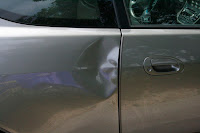
A ding or more commonly known as a “door ding” is considered no bigger than the size of a quarter. Although these types of dings are considered common repairs made by Dent Time of San Diego and most other PDR companies around the country. Door dings can also range in price depending on how sharp, location and access. The average time to repair a typical door ding ranges between 15 minutes to an hour. Multiple dings on multiple panels vary between 1-2 hours.

“Dents”

A dent is considered the size of a silver dollar or bigger. In general, a dent is sharper, bigger and require more time to remove. Depending where it is located on the panel, the PDR technician must determine access points for leverage as well. Again, prices vary depending on depth, location, and access. The average repair time for removing a common dent about the size of a grapefruit is between 1-2 hours. Multiple dents vary between 1-4 hours.

“Creases”

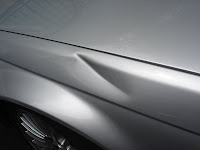
A crease is considered a dent or ding that has a line shape indentation in the metal panel. This type of crease can vary in width, length and depth. A crease is also considered one of the most difficult repairs to achieve for most common PDR companies. A good reason for this would be to say that it is like folding a piece of paper and then trying to iron the line out. If not performed correctly, you will still be left with a smaller or thinner line. With this in mind, it is strongly considered to choose an experienced PDR company who specializes in creases and complex dents like ourselves. Average repair time for a single crease varies between 30 minutes to 2 hours.


Seattle Mobile Paintless Dent Repair / Ding Removal PDR

Ξ October 24th, 2007 | → 0 Comments | ∇ Paintless Dent Repair Companies |

Serving the Seattle, Washington area. Mobile paintless dent repair is an affordable and cost-effective way to remove those unwanted door dings, creases and dents without using paint or fillers. Most dings and dents removed within 60 minutes!

This Seattle paintless dent removal service will be serving all the surrounding areas. For more information or to locate a technician near you, please go to ReconExpress.com

Please feel free to post any questions or comments regarding PDR.


Online Paintless Dent Repair/Ding Removal Estimate Quote

Ξ October 17th, 2007 | → 1 Comments | ∇ Automotive Reconditioning News |

Get an Express Quote and a fast estimate for paintless dent removal (PDR), plastic bumper repair, wheel & rim repair, mobile auto body paint & key scratch repair. Recon Express offers an online fast estimate when you submit your photos, which makes it easy for anyone to get an online estimate without you even driving your vehicle. Most dent, bumper and paint repair estimates are replied withing 30 minutes or less!

We all understand most people’s deductibles are $500. Or even if yours is half the cost of that, it’s still wise to see if we can save you money without making an insurance claim. No matter where you are at, give it a try and see if we can help you avoid that insurance claim that could potentially raise your rates.

ReconExpress.com is an online automotive reconditioning directory that helps locate a service company to the public for paintless dent removal, bumper repair, wheel and rim restoration and even mobile auto body paint & paint repair.

If you are an automotive reconditioning company who would like to participate in this program, please visit the main web site.


Phoenix Mobile Paintless Dent Removal/Bumper Repair

Ξ October 17th, 2007 | → 0 Comments | ∇ Bumper Repair Companies |

Offering the convenient mobile paintless dent removal (PDR) and plastic bumper repair service in the Phoenix, Arizona area. These convenient services save lots of time and money without sacrificing quality. Contact Nick at 602.909.9378.

If you are from a different area, Find your local company and just visit ReconExpress.com or submit your photos for an express quote online!


San Diego Dent Repair - 30 minute Online Estimate

Ξ October 15th, 2007 | → 0 Comments | ∇ Paintless Dent Repair Companies |


DentTime.com makes it easy for you to get an online paintless dent repair estimate in just under 30 minutes or less. From Dent removal to scratch repair, this state of the art mobile auto reconditioning company restores your vehicle without you even leaving your vehicle. Online dent and bumper repair videos demonstrate vehicles being restored back to new within hours and not days!

Get an online estimate for:
Paintles dent repair/removal PDR
Mobile plastic bumper and scuff repair
Mobile auto body paint and key scratch repair
Bent wheel/rim repair, curb scrapes.

To get your quick quote, just email them your photos from their website. Don’t forget to add a description and boom you’ll have an accurate quote in minutes!


Paintless Dent Repair/Removal - Line Board Manual

Ξ October 15th, 2007 | → 0 Comments | ∇ Uncategorized |

Line Board gets a manual created for new beginner and advanced PDR techs. It appears there is a demand for learning new ways to read a dent. Here is an article written on our other blog about the paintless dent repair manual

This PDR Line Board manual will seem to help the average PDR tech fine tune his/her finishing techniques. It’s not just about the lines though. There are techniques for vision and sight, stances, being efficient with minimal tools, knocking down procedures, crowns and much more. We also forgot to mention, the PDR manual has fantastic diagrams with very understandable step by step sequences. Expect to see this on the market late October from AutoLecture.com


Los Angeles Bumper Repair Company Uses Waterborne Paint

Ξ October 13th, 2007 | → 0 Comments | ∇ Uncategorized |

Los Angeles - SOS Bumper is the first to set the trend for mobile waterborne paint repair. The word on the streets is all body shops and mobile bumper and paint techs will have to be compliant between 2009-2010.

SOS Bumper, which is actually a sub division of SOS Dent in Los Angeles, already purchased the Glasurit waterborne paint system.
David (Owner of SOS Bumper and Dent) says, “It’s been a real pain in the butt setting up the van because this is new territory for us.” He also mentions, “Most reps didn’t really know about the full reactions about the paint and the pros and con’s.” The pros, it lays on nicely and pretty much everything is the same. But.. the in between time for drying is not so great. For most body shops, it’s not such a big deal. The difference with waterborne and oil base paint is the dry time and the methods. Oil base uses lights, heat and UV lights to cure the paint. Waterborne uses forced air.

The problem with forced air is it might blow dust onto the fresh paint and trap debris if not in a controlled environment. “It’ll be a little challenging but we are eager to see how its going to be”, says David.

Waterborne paint seems to be the future. As a mobile auto reconditioning owner myself, in my opinion, I believe the auto paint industry will have later updates with new technology just for these reasons. Besides, they have a soon to be huge mobile market to cater to!

Do you have something to say? Please join our blog and give us your thoughts.


Windshield Protection Film - No More Rock Chips!

Ξ October 13th, 2007 | → 0 Comments | ∇ Windshield Protection Film |

This content was taken from Proline Windshield

Proline Windshield Skins (PWS) is an auto clear protective window film applied to the exterior surface of a windshield. Its purpose is to prevent damage from ordinary highway rock strikes and other road debris. Impacts which shatter unprotected glass leave only a minimal pin-point on the film, preserving its optical clarity. Like glass, PWS is scratch resistant and stands up to everyday abrasions (including windshield wipers). PWS also provides optical clarity and UV protection. The film is virtually invisible and is guaranteed not to peel, bubble, crack, or yellow, for the warranted life of the product (see Features and Benefits for warranty details) therefore the driver’s vision is not impaired.

There are three main benefits in installing PWS:
• Impact resistance against normal road hazards.
• UV stabilizers which reduce vehicle heat, prolonging interior life.
• Faster run-off rain, snow and other elements, providing better visibility.

Some other Features & Benefits:

Scratch Resistant – PWS is a hard-coated film that features much the same scratch resistant qualities as glass and protects against normal abrasions such as windshield wipers.

Remains Adhered to Windshield – the adhesive used is strong enough that high-powered car wash streams do not cause the film to lift. Although the PWS is not permanent it has a unique adhesive that keeps the film adhered tightly to the windshield. If the PWS needs to be removed for any reason, it can be removed using a semi-sharp instrument, such as a knife blade, to lift up one corner of the film. Proceed by pulling the film with constant pressure, after the film is removed completely use a basic soap and water solution to clean off any adhesive residue (additional details on the removal of PWS is available).

Two-year Limited Warranty – PWS offers a Two-year or 24,000 mile Warranty.

Weather Repellant – Yes the product repels rain and snow to give the driver a clearer and safer viewing during driving (performs similar to Rain-X).

Feel free to comment or ask questions. We’ll be happy to oblige.


Training to Learn PDR Isn’t Easy (Paintless Dent Repair)

Ξ October 13th, 2007 | → 2 Comments | ∇ PDR Training |

Ferarri DinoOne thing about training and learning paintless dent removal/repair (PDR), is that it sure isn’t easy at it appears. We took a post from Dent Time’s blog written by Myke Toledo who explains more about what you should know if you are interested learning more about training in the art of paintless dent repair (PDR).

Are you thinking of learning or training in paintless dent repair or removal? Have you been looking around and getting information and getting the REAL FAQ’s about PDR? In case you haven’t, we would like to inform you the real truth about PDR.

As easy as paintless dent removal may seem or look, it’s not. Did you ever notice when somebody makes something appear so easy you think you can do it in no time? We thought so. That’s because it takes time and experience to develop such a skill. It’s the same with PDR. Not only does it take time to learn but more important, who you learn from and how much time you put in during and after your PDR training.

We here at Dent Time we know the many pitfalls and deceptions of paintless dent repair training. Our topic has multiple meanings about PDR not being easy. Here are a few we will discuss.
Dino BeforeDino After

#1 Choosing the Right PDR Company for Training

BEWARE! Many so called schools try to entice you with hotel packages, free lunch, giant tool packages and accessories (we’ll get to that later on another post). But what they really fail to concentrate on is the reason you’re there, and that’s good PDR training.

The Longer Your PDR Dent Training, The Better!

Time well spent is the essence. The longer you get to absorb what you learn the better your practice will become. Not to mention, your learning curve is much faster. Unless you are going to do advanced PDR classes, 4 weeks is the minimum you should take. Why you ask? Can you imagine learning years of experience from just one week? It’s hard enough to learn in 4 weeks let alone in less. You see, if you don’t give your self a chance to absorb what you learn, you’ll forget in the real world. With most schools, you are totally alone after you complete your course. Fat chance of you getting a hold of the instructor when you’re stuck too. There’s a lot to learn.

Get a Hold of the PDR Trainer/Instructor

It’s important you talk to the trainer or instructor before you actually commit your hard earned money. Bypass the sales person (Which should be a flag!) and ask for the person you are going to learn paintless dent repair from. This will tell you if they are really committed more than you! Ask lots of questions and we mean real questions.

Here are a few. Am I going to learn on all panels or just hood panels? Will I be working in the same environment/situation everyday? How much personal attention do you spend with me? How many people are going to be in my class? What is your success rate? Do you have other students that came from your school that can testify about your training? Do they have websites? Do you personally follow up on my progress after the training?

After asking these specific questions, you should have a good idea of what’s to come.

Later we’ll continue to post more topics about paintless dent repair training and interviews from other well respected PDR training companies.

Please feel free to ask any questions regarding your concerns and give opinions about this paintless dent repair/removal PDR training.


Next Page »